Quartz countertops deliver exceptional resilience in compact kitchens—resisting scratches, stains, and bacterial growth thanks to their non-porous surface. This low-maintenance durability is essential where space efficiency and hygiene are non-negotiable. Complementing quartz, reclaimed wood accents bring warmth and narrative depth through unique grain patterns and historical patina. Sourced from deconstructed barns, factories, or bridges, each piece reduces embodied carbon while grounding the interior in authenticity and sustainability. Together, these materials forge a refined duality: quartz provides modern performance; reclaimed wood offers tactile, ethical storytelling.
Hemp composite and bamboo flooring represent high-performance sustainability—hemp lasts up to 50% longer than conventional hardwood and actively sequesters carbon during growth, while bamboo matures in just 3–5 years (versus 20+ for oak). When paired with richly stained wood ceilings, they establish vertical rhythm that counteracts spatial compression. Dark ceiling stains draw the eye upward, enhancing perceived height, while light-reflective bamboo floors bounce natural light across the room. This intentional layering proves eco-conscious material choices can elevate—not dilute—luxury, turning compact interiors into cohesive, elevated environments.
Light-reflective palettes—using paints and finishes with reflectance values above 80%—visually expand confined spaces, increasing perceived volume by up to 30% according to spatial perception research. Layered lighting reinforces this effect through three coordinated tiers: ambient LED strips along ceiling perimeters (3000K warm-white), focused task lighting over work surfaces, and adjustable accent spots highlighting architectural details like reclaimed beams or built-in shelving. High-gloss lacquer cabinetry and brushed-metal hardware further amplify light distribution. The result is a dynamic, adaptable interior where luminosity—not square footage—defines spaciousness and serenity.
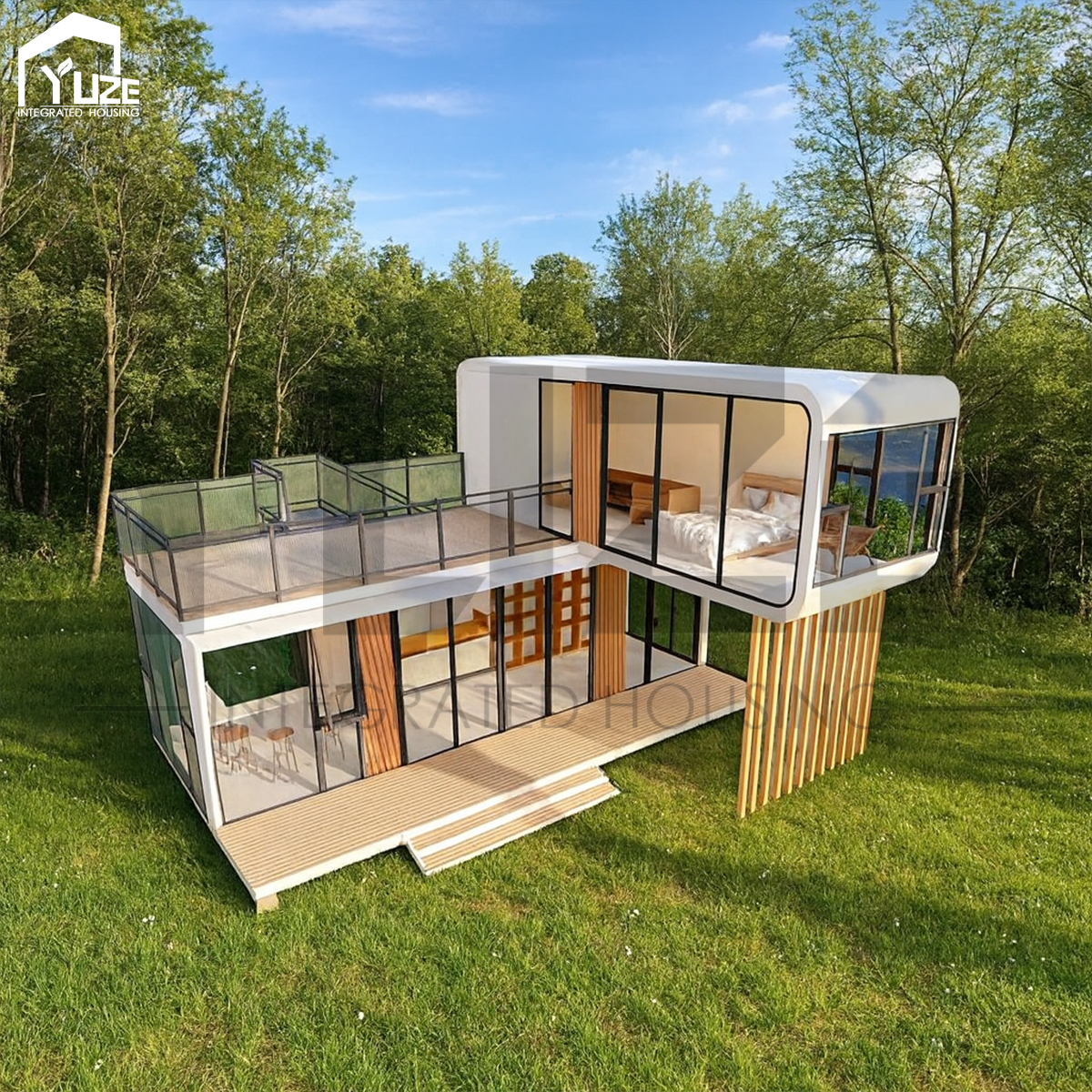
Floor-to-ceiling glazing dissolves interior boundaries, forging uninterrupted sightlines to nature and extending perceived square footage by 15–20%. Paired with vaulted ceilings reaching 10–12 feet, these elements guide the eye upward, leveraging our innate association of vertical space with openness and luxury. North-facing windows maximize consistent, glare-free daylight without thermal penalty, while thermally broken aluminum frames preserve energy efficiency year-round. This architectural strategy doesn’t just compensate for scale—it reorients perception, transforming tight footprints into airy, grounded sanctuaries.
Luxury tiny houses integrate HVAC, security, and lighting into unified smart platforms—controlled via voice, touch panels, or mobile apps—eliminating visual clutter while optimizing performance. AI-driven thermostats learn occupancy patterns to reduce energy waste by up to 23%, as documented in 2024 residential efficiency studies. Circadian-synchronized lighting adjusts color temperature and intensity throughout the day, supporting biological rhythms without requiring wall-mounted switches or bulky hubs. This consolidation delivers intuitive control, not complexity—putting intelligence at the service of comfort and calm.
True luxury in compact living harmonizes automation with off-grid integrity. Solar-compatible systems prioritize critical functions during low-power conditions—maintaining refrigeration and water monitoring before entertainment or ambient lighting. Battery-backed security sensors remain active through outages, and moisture-detection networks protect sensitive finishes like reclaimed wood from hidden leaks. As confirmed by a 2023 survey of high-end tiny homeowners, 68% value smart technology primarily for its role in resource conservation—not novelty—affirming that intelligent design must serve resilience first, elegance second.
Luxury tiny houses redefine spatial constraints as catalysts for precision craftsmanship. Convertible dining tables that pivot into full workstations, staircases with integrated drawers and charging ports, and Murphy beds with concealed desks exemplify how bespoke fixtures eliminate compromise. These aren’t gimmicks—they’re rigorously engineered solutions that maintain aesthetic continuity while delivering layered utility. Custom cabinetry embeds wireless charging, modular shelving adapts to shifting needs, and pocket doors replace swinging ones to reclaim precious inches. Every element serves dual roles: visually refined and functionally indispensable. In this context, luxury isn’t added—it’s distilled: intentional, exact, and entirely human-centered.
What makes quartz countertops ideal for tiny houses?Quartz countertops are non-porous, making them resistant to scratches, stains, and bacterial growth—perfect for space-efficient and hygienic kitchens.
Why is reclaimed wood considered sustainable?Reclaimed wood is sourced from deconstructed structures, reducing embodied carbon and adding historical depth to interiors.
How do hemp and bamboo flooring contribute to sustainability?Hemp lasts longer than traditional hardwood and bamboo matures quickly, both minimizing environmental impact and promoting sustainable practices.
What are the benefits of smart home integration in tiny houses?Smart home technology optimizes energy efficiency, enhances comfort, and prioritizes critical functions during low-power conditions, supporting sustainability.

Guangzhou Yuze Integrated Housing Co., Ltd.
Copyright © Guangzhou Yuze Integrated Housing Co., Ltd. - Privacy policy

 EN
EN