 EN
EN
Container Home vs Traditional Home: Long-Term Cost Comparison
When I first started looking into alternative housing options, the sticker price was what caught my attention. A container home seemed dramatically cheaper than building a conventional house — and for a lot of buyers, that upfront number is where the analysis stops. But after working through the actual numbers over a longer horizon, I realized that comparing a container home to a traditional home is less about the purchase tag and more about what you pay across five, ten, or twenty years of ownership.
This cost comparison walks through the key categories — upfront build cost, site preparation, maintenance, energy efficiency, and long-term value — so you can make a more honest assessment for your specific situation. If you're thinking about it as a permanent residence, the math looks different than if you're planning a short-term or income-generating use.
Upfront Construction Costs: Where Container Homes Have the Advantage
A basic single-container home — typically built from a 20 ft or 40 ft shipping container — can be finished for somewhere between $40,000 and $80,000 depending on the level of fit-out. Smaller, more stripped-back models start around $10,000 to $35,000 for the unit itself, though that figure doesn't include delivery, foundation, or interior finishing. Multi-container builds with higher-end finishes can run $150,000 to $175,000 or more, which is where the gap with traditional construction starts to narrow.
Traditional home construction in most North American markets starts at roughly $100 to $200 per square foot for a standard new build, and that number climbs sharply with location, design complexity, and material quality. A 1,500 sq ft conventional home in the $150/sq ft range lands at $225,000 before land, permits, and landscaping. For equivalent livable space, a container home can often be completed for $80,000 to $120,000 — a meaningful cost difference at the point of build.
That said, finished container homes typically run $150–$350 per square foot when all customization costs are included. The upfront advantage exists, but it's conditional: it depends heavily on how much you customize the build and whether your site allows for efficient installation.
Site Preparation: The Cost That Surprises Most Buyers
One of the most common surprises in a container home project is discovering that foundation preparation and utility connection requires significantly more work than originally estimated. This is true of traditional homes as well, but it tends to catch container home buyers off guard more often — possibly because the low unit price creates an expectation that total project cost will stay proportionally low.
Container homes require a level, stable foundation — typically a concrete slab, concrete piers, or a steel frame. Foundation costs alone can run $5,000 to $25,000 depending on soil conditions, site access, and local codes. Add utility trenching, septic or sewer connection, electrical hookup, and grading, and site costs can reach $15,000 to $40,000 before a single container is placed. Traditional homes factor this in more consistently at the planning stage, so the surprise factor is lower — but the actual cost range is comparable.
Before you run a final project budget, it's worth getting a site assessment done early. The foundation and utility connection costs are where budget overruns most commonly originate in container home projects.
Maintenance Costs Over 10–20 Years: Container Homes Are Competitive
Maintenance is where the long-term math shifts for most buyers. Container homes are built from corten steel — a material designed for long-term weather exposure — but that steel still requires periodic treatment to prevent rust and corrosion, especially in humid or coastal environments. Annual maintenance costs for a container home are generally estimated at $300 to $1,000 per year, covering rust prevention coatings, sealant reapplication, and roof inspection.
Over a 20-year period, that adds up to roughly $6,000 to $20,000 in maintenance spend — which compares favorably to traditional wood-frame homes, where cumulative maintenance (roof replacement, siding repairs, foundation crack repair, HVAC servicing) can run $30,000 to $60,000 over the same period. The specific gap depends heavily on climate and build quality, but the structural simplicity of a steel container tends to mean fewer surprise repair events compared to multi-component traditional construction.
A well-maintained container home can last 25 to 75 years. Consistent rust control and waterproof sealing are the primary levers on that lifespan range. Skip the maintenance and the lower end of that estimate becomes realistic; stay on top of it and the structure can outlast a lot of conventional timber-frame builds.
Energy Efficiency: Traditional Homes Often Have the Edge — Unless You Upgrade
Steel is a thermal conductor, which means an unmodified shipping container is neither well-insulated nor energy-efficient. Container homes require deliberate insulation work — spray foam, panel insulation, or a combination — to perform comparably to a conventional well-insulated home. When this is done well, energy performance can be similar. When it's done cheaply, you end up with higher heating and cooling costs that compound over years.
In climates with significant temperature swings — North America, Northern Europe, parts of Australia — insulation quality has a measurable impact on annual utility bills. A poorly insulated container home might cost $200–$400 more per year in energy than a similarly sized traditional home with standard insulation. That differential may seem small annually, but over 15 years it adds $3,000 to $6,000 to the total cost picture. If you're building a container home in a climate-demanding region, it's worth investing in insulation that matches or exceeds conventional building standards — the long-term savings more than offset the upfront difference.
Long-Term Value and Resale: The More Complex Part of the Comparison
Traditional homes have an established resale market with predictable appreciation patterns tied to location, neighborhood, and general market conditions. Container homes, as a category, have a less established resale track record — partly because they're still relatively new as a mainstream residential option, and partly because financing can be more complex for non-traditional structures in some markets.
This doesn't mean container homes depreciate — in markets with growing demand for alternative and sustainable housing, well-built container homes can appreciate meaningfully. But buyers planning to sell in 5–10 years should factor in that the resale pool may be narrower, and financing options for potential buyers can affect achievable sale price. This is one area where a traditional home, all else equal, currently carries lower transaction risk for most sellers.
The perception of container homes as "temporary" structures is increasingly outdated. Many jurisdictions now permit container homes as permanent dwellings, and properly permitted and engineered container homes are assessed and valued comparably to other residential structures by many appraisers. That said, building permit requirements vary significantly by location — verifying local code acceptance before committing to a container home build is a necessary first step, not an afterthought.
Which Is More Cost-Effective Long-Term?
For buyers whose primary concern is minimizing total 20-year housing cost, a well-designed and properly insulated container home in a permitting-friendly location can offer a genuine cost advantage — particularly on the build side and on maintenance over time. The upfront savings are real, the maintenance cost profile is favorable, and the durability of quality corten steel construction is solid.
The areas where traditional homes maintain an advantage — established resale markets, easier financing, and more predictable energy performance without insulation upgrades — are real factors to weigh. If your situation includes resale within a short horizon, or you're in a jurisdiction where container home permitting is complicated, those factors can offset some of the construction-phase savings.
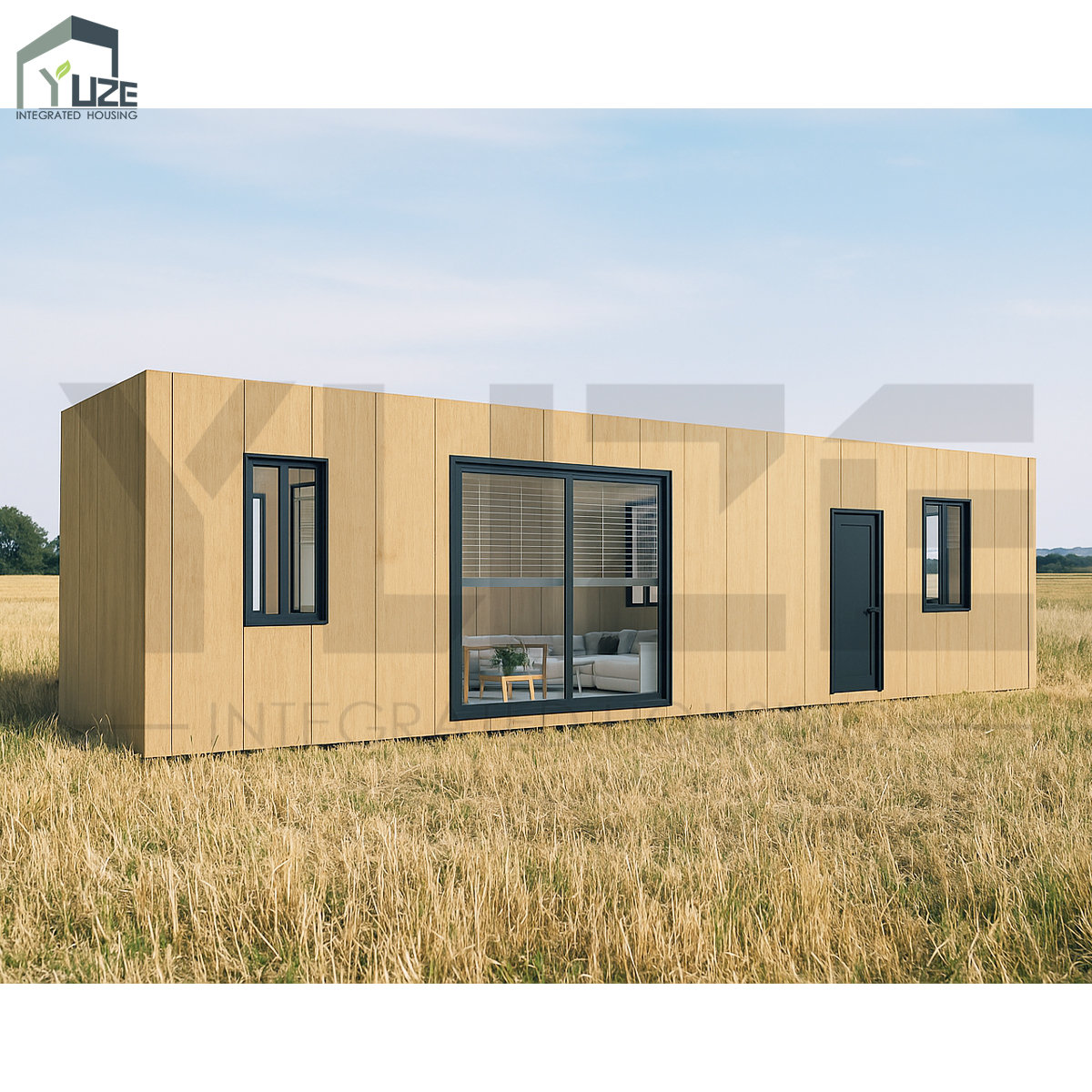
Manufacturers like Guangzhou Yuze Integrated Housing Co., Ltd. supply prefabricated container home structures globally, and part of what makes the cost comparison work in the buyer's favor is sourcing from a direct manufacturer rather than paying domestic contractor margins on top of an imported unit. For commercial or residential project buyers comparing total landed cost, working directly with a factory that covers structural fabrication, insulation installation, and interior fit-out under one roof tends to reduce the hidden cost gaps that appear in multi-vendor supply chains.
Whatever direction you're considering, the honest answer is: run the numbers for your specific site, climate, and timeline. The container home can win that comparison clearly — but only if the insulation is done right, the site preparation costs are budgeted accurately, and the long-term maintenance plan is realistic.