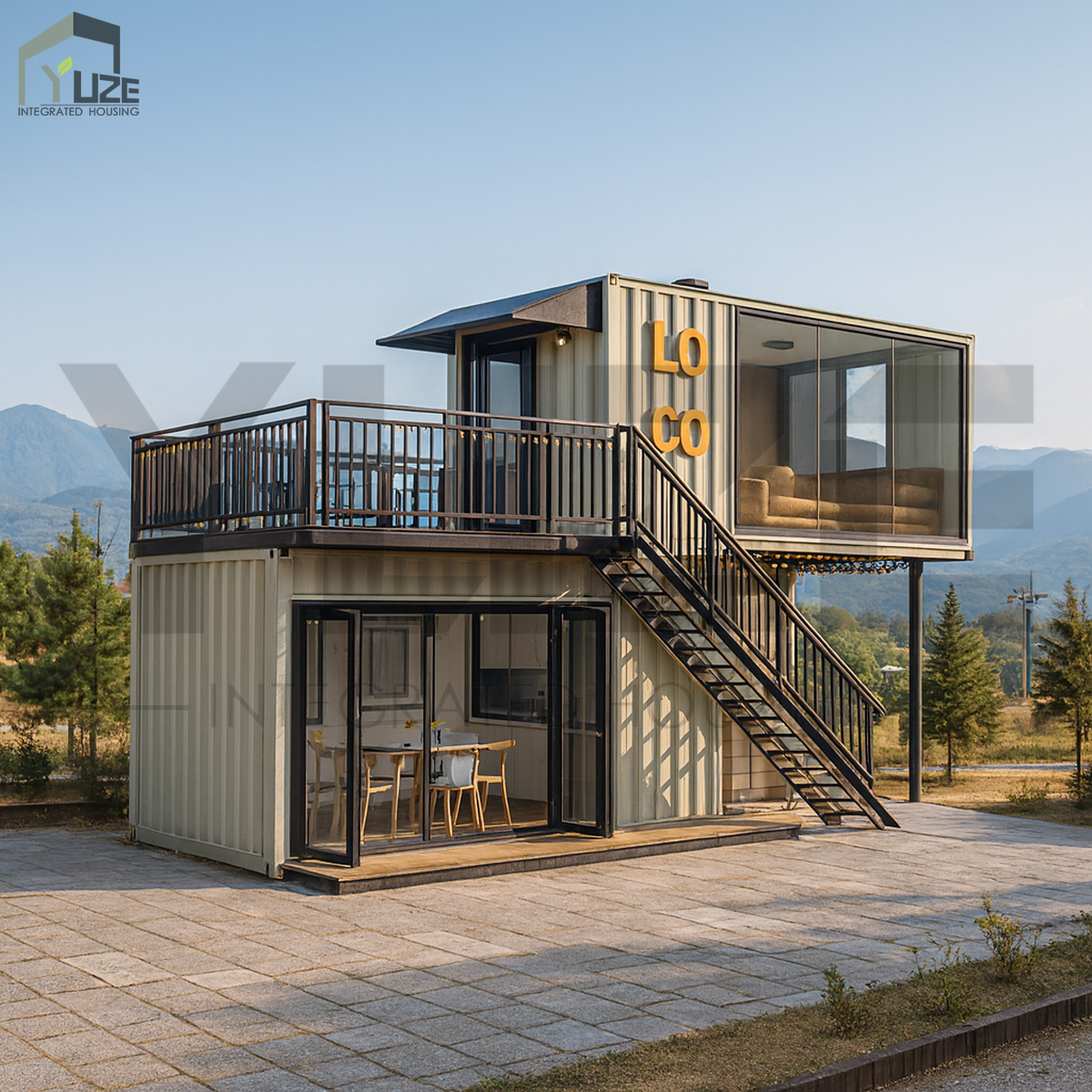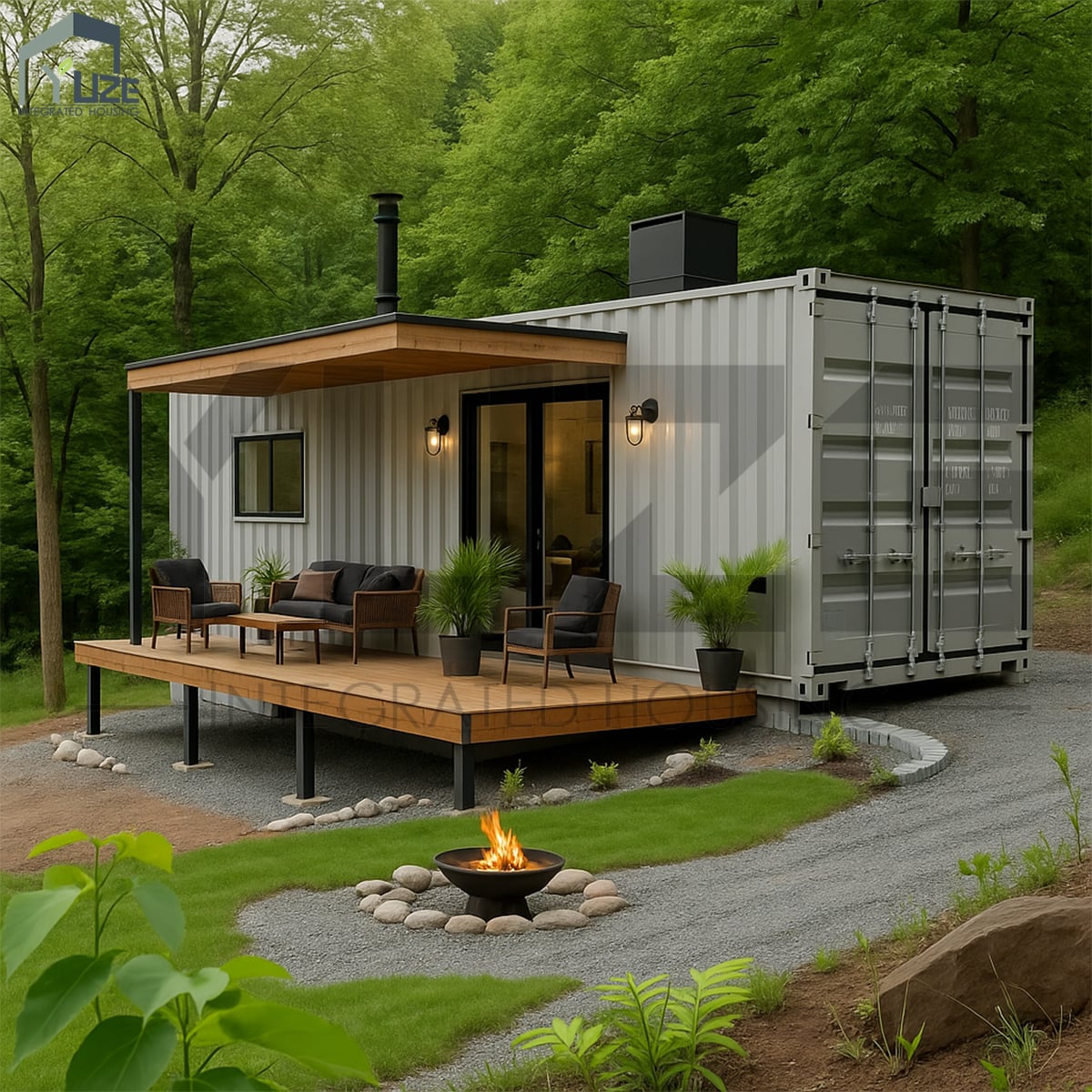
Rural areas across the United States face a severe deficit of homes that are both affordable and accessible. According to the Housing Assistance Council, over 1.5 million additional rental units are needed to meet current demand in small towns and remote regions. Aging housing stock, low household incomes, and limited financing options intensify the problem. Many existing dwellings lack basic accessibility features—such as zero-step entries, wide doorways, or single-floor living—leaving seniors and people with disabilities with few suitable choices. Traditional site-built construction often fails to close this gap: high per-unit costs and scarce skilled labor make new projects financially unfeasible. The result is a cycle of deteriorating housing, out-migration, and declining community vitality. A prefabricated house offers a practical alternative—factory-built modules can be designed to universal design standards from the start, delivering accessible, energy-efficient homes at a cost that aligns with rural budgets.
Building in isolated locations typically multiplies expenses and delays. Prefabricated house construction solves these challenges by shifting most work to a controlled factory environment. Modules are produced with precision, then transported to the site for rapid assembly—slashing on-site labor requirements by up to 50% and cutting total project duration by nearly one-third, according to the National Association of Home Builders (2023). Bulk procurement of materials and standardized panel designs further reduce costs and waste. Weather-related setbacks are minimized because the majority of construction happens indoors, and the shorter on-site phase means less exposure to remote-area risks like material theft or equipment breakdowns. This predictable timeline helps families and developers plan budgets with confidence, while the reduced need for large, specialized crews directly addresses the chronic labor shortage plaguing rural communities. The result is a reliable, scalable path to delivering high-quality homes where they are needed most.
Factory-based production transforms rural housing budgets from uncertain estimates into fixed, reliable figures. In a controlled environment, material quantities, labor hours, and overhead costs are measured precisely—eliminating the guesswork common on distant job sites. A prefabricated house typically arrives with a guaranteed module price, so developers and homeowners avoid the financial surprises that plague traditional builds: weather delays, last-minute material shortages, or sudden labor rate hikes. This transparency is vital for rural projects where even minor overruns can derail funding. Modular construction consistently reduces overall project costs by up to 20% compared to on-site methods, per the Modular Building Institute (2023). By locking in costs before ground is broken, stakeholders gain confidence to plan and allocate resources without fear of runaway expenses.
Bulk purchasing of raw materials across multiple projects allows manufacturers to secure lower prices—a benefit passed directly to rural buyers. Standardized wall and roof panels streamline production, cutting time and material use per unit. This factory precision reduces on-site waste dramatically—often by half compared to conventional building, where offcuts and errors accumulate. Labor efficiency also improves: a prefabricated house requires minimal on-site assembly, slashing the need for specialized crews traveling to remote areas. The combination of fewer hours, less waste, and optimized material use ensures every dollar stretches further—making high-quality rural housing achievable on a modest budget.
A prefabricated house built for rural areas can seamlessly integrate universal design from the factory floor—eliminating costly on-site retrofits. Floor plans are engineered with zero-step entries, 36-inch-wide doorways, lever-style hardware, and wheelchair-turning spaces in kitchens and bathrooms. According to AARP (2021), 77% of adults over 50 wish to age in place—making accessible-ready features critical. Structural blocking for grab bars, reinforced walls for future lift installations, and adaptable bathroom layouts are framed in at the factory. Site installation then aligns with the prepared lot: ramps are integrated, entries are flush, and pathways are graded for barrier-free movement. This approach ensures that a prefabricated house supports independence and safety from day one—while reducing the long-term cost of aging in place in rural settings.
Standardization keeps prefabricated house costs low, but modular design allows targeted accessibility upgrades. Slab foundations offer seamless zero-step entry, while stacked floor plans can include reinforced shafts and structural provisions for a future residential elevator. By choosing slab-on-grade or factory-prepared elevator-ready cores, buyers tailor their unit without sacrificing the efficiency of bulk production.
Government action is emerging as a decisive lever for expanding prefabricated housing in rural communities. Strategic policy measures can directly lower costs and reduce delivery timelines—a need underscored by international programs. Canada’s Rapid Housing Initiative deployed roughly 5,000 modular social housing units by 2023, while Scotland’s £3.1 billion Affordable Housing Programme has accelerated volumetric construction in remote areas. In the U.S., similar results require modernizing rural housing programs. Zoning reforms that permit by-right placement of prefabricated house units, streamlined permitting that cuts approval times, and targeted financial incentives—such as zero-interest loans or density bonuses for factory-built affordable projects—can unlock private investment. Public-private partnerships offering manufacturers multi-year purchase commitments create the demand certainty needed to scale production. By aligning federal and state policies with the inherent efficiency of off-site construction, rural America can transform a persistent housing shortage into a model of rapid, inclusive development.
Prefabricated houses offer quicker construction times, reduced costs, efficient use of materials, accessibility features, and scalable solutions for housing shortages in rural regions.
Prefabrication shifts most of the work to a factory environment, thus reducing on-site labor, cutting construction timelines, minimizing waste, and mitigating risks associated with remote project locations.
Yes, modular construction reduces project costs by up to 20% compared to traditional methods due to bulk procurement, standardized designs, and improved labor efficiency.
Absolutely. While maintaining cost efficiency through standardization, buyers can include targeted upgrades like elevator-ready shafts or ramps to suit specific accessibility needs.
Zoning reforms, simplified permitting processes, financial incentives, and public-private partnerships could accelerate prefabricated housing adoption by reducing barriers and creating demand certainty.

Guangzhou Yuze Integrated Housing Co., Ltd.
Copyright © Guangzhou Yuze Integrated Housing Co., Ltd. - Privacy policy

 EN
EN