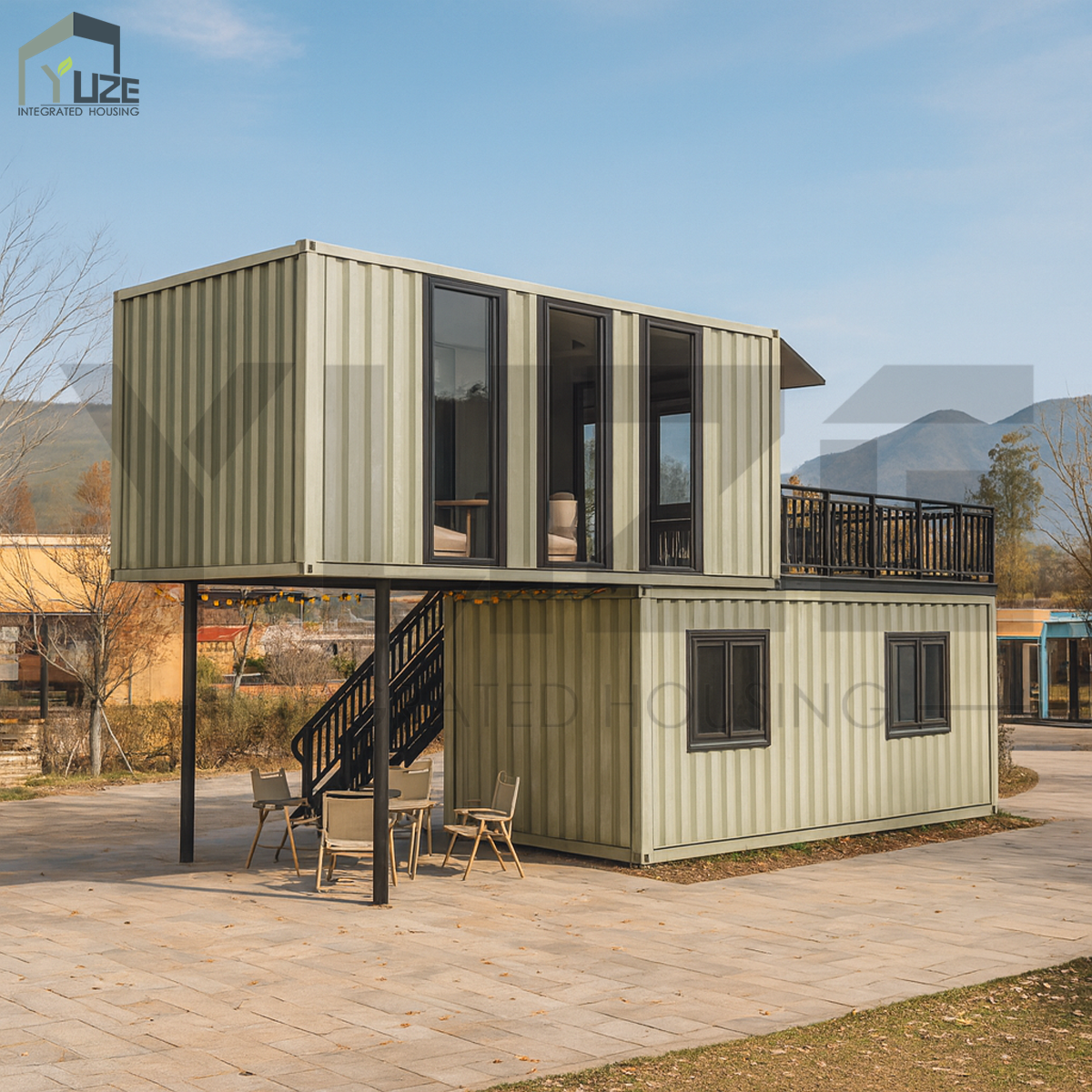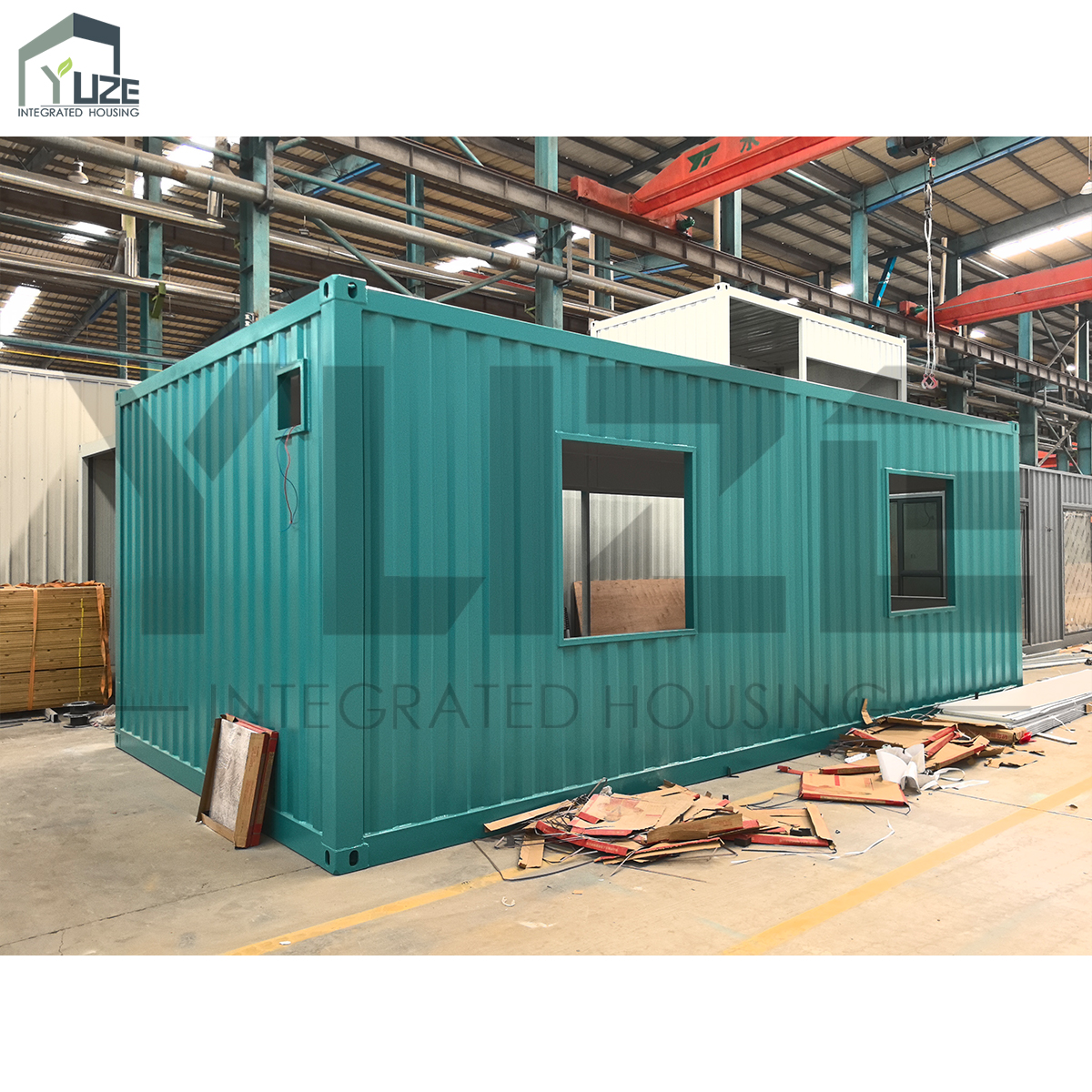
Industrial design and container houses share a natural synergy. The raw steel walls, exposed beams, and concrete floors that define industrial aesthetics are already inherent to the shipping container’s structure—no retrofitting required. Rather than concealing these elements, industrial-style interiors celebrate them as bold, authentic features. This approach reduces finishing costs while preserving the container’s original character and structural honesty. The open-plan layout central to industrial design also directly addresses the spatial constraints of narrow container dimensions: by minimizing interior partitions, you enhance visual flow and perceived volume. Crucially, industrial style is highly adaptable—reclaimed wood accents, soft textiles, and warm-toned lighting introduce comfort and warmth without diluting its edgy, grounded appeal. The result is a space that feels both visually compelling and thoughtfully livable.
Shipping container houses naturally embody industrial design principles through their built-in materiality—steel frames, corrugated walls, and exposed mechanical systems form an authentic foundation. Leveraging this DNA aligns with core industrial values: structural transparency, material integrity, and functional beauty. By embracing what’s already there, homeowners reduce construction waste, lower renovation budgets, and strengthen the narrative of their home’s origin story.
Retaining original steel elements—corrugated wall panels, ceiling ribs, and frame beams—is both economical and expressive. When treated with clear anti-corrosion coatings (like Rust-Oleum Protective Enamel or similar ASTM-certified sealants), these surfaces retain durability while highlighting the container’s engineering legacy. Unlike drywall concealment, this strategy reinforces authenticity and serves as a constant, tactile reminder of the structure’s maritime roots—turning infrastructure into intentional design.
To offset steel’s thermal and visual coolness, integrate reclaimed timber in ceiling beams, shelving, or a single feature wall. Its weathered grain and organic warmth create rich tonal contrast against metallic surfaces. Pair it with polished concrete floors or countertops—monolithic, low-maintenance, and inherently industrial—to anchor spaces with grounded, sculptural presence. Together, these materials achieve balance: wood offers texture and tactility; concrete delivers density and continuity; steel provides rhythm and structure. No single material dominates—each earns its place through purposeful contrast.
In a container house—where width rarely exceeds eight feet—lighting and texture become primary spatial tools. Strategic layering transforms tight proportions into perceptually generous environments. Contrast-driven lighting divides the narrow interior into intuitive zones, while deliberate textural juxtaposition adds depth, warmth, and dimensionality to otherwise minimal surfaces.
Black-steel pendants—such as those from Schoolhouse Electric or Matteo Lighting—anchor key areas like the kitchen island or dining table, drawing the eye downward and establishing visual hierarchy. Complement them with dimmable Edison-style bulbs (2700K–3000K CCT), whose amber glow diffuses harsh reflections off raw steel walls. Recessed LED strips installed along ceiling perimeters deliver even, shadow-minimizing ambient light—critical in low-ceiling containers where overhead fixtures can encroach on headroom. This three-tiered system creates layered depth, guiding movement and subtly expanding perception of space.
Every surface must serve dual roles: functional and sensory. The container’s corrugated steel wall provides rhythmic, tactile roughness; polished concrete floors offer seamless, reflective smoothness; reclaimed timber—whether on an accent wall, floating desk, or open shelving—introduces grain, warmth, and organic variation. This triadic textural dialogue prevents visual fatigue, defines zones without walls, and humanizes the industrial shell. In compact layouts, such intentionality turns constraint into curation—making every square foot feel considered, cohesive, and comfortable.
Designing within an 8-foot width demands vertical intelligence—not just horizontal efficiency. Prioritize vertical zoning: loft sleeping platforms over kitchens or entries free up floor space below, while tall, ceiling-height cabinetry maximizes storage without footprint expansion. Integrate accessible overhead storage using fold-down ladders or pull-down stair systems (e.g., Foldaway Stairs or Loft Ladder Co.). Wall-mounted solutions—pegboards, rail systems, or modular hooks—keep essentials within reach yet out of the walkway. Multi-functional furniture is non-negotiable: a sofa bed, a wall-mounted fold-down desk, or a dining table with concealed drawers serves multiple roles without crowding. These strategies convert linear limitations into vertical opportunity—delivering full functionality within minimal square footage.
An open floor plan enhances airiness and spatial continuity—but privacy and function remain essential. Use sliding barn doors, pocket doors, or heavy linen curtains to softly partition sleeping or work zones when needed. For larger builds, joining two containers end-to-end or side-by-side allows dedicated zones: one unit for kitchen-living-dining, the other for bedroom-bathroom—connected by a shared corridor or glass bridge. Large, operable windows (double-glazed for thermal performance) and strategic furniture placement—such as a low-profile sofa oriented toward a window wall—further reinforce flow while maintaining clear circulation paths. The outcome is a home that breathes openly yet respects personal boundaries—industrial in spirit, residential in sensibility.
Industrial style naturally complements the raw materials of container homes, emphasizing structural honesty and reducing finishing costs by embracing the container's inherent features.
Key materials include exposed structural steel, reclaimed wood, and polished concrete, which together provide structural transparency and material integrity.
Lighting, particularly contrast-driven systems like black-steel pendants and recessed LEDs, can enhance spatial perception by creating layered depth and warmth.
Vertical zoning and multi-functional furniture optimize space, while open-concept designs maintain flow and privacy, allowing full functionality within limited square footage.

Guangzhou Yuze Integrated Housing Co., Ltd.
Copyright © Guangzhou Yuze Integrated Housing Co., Ltd. - Privacy policy

 EN
EN