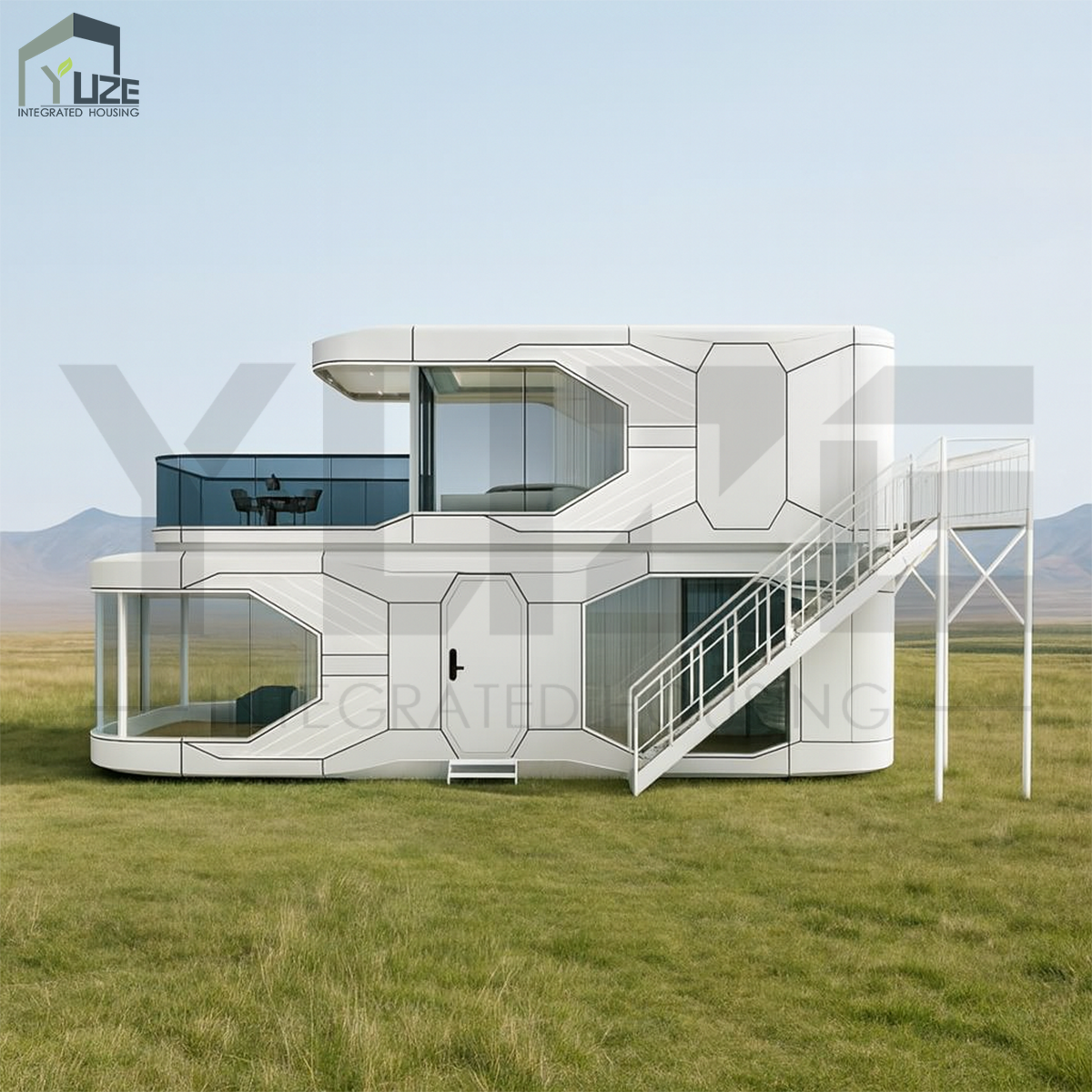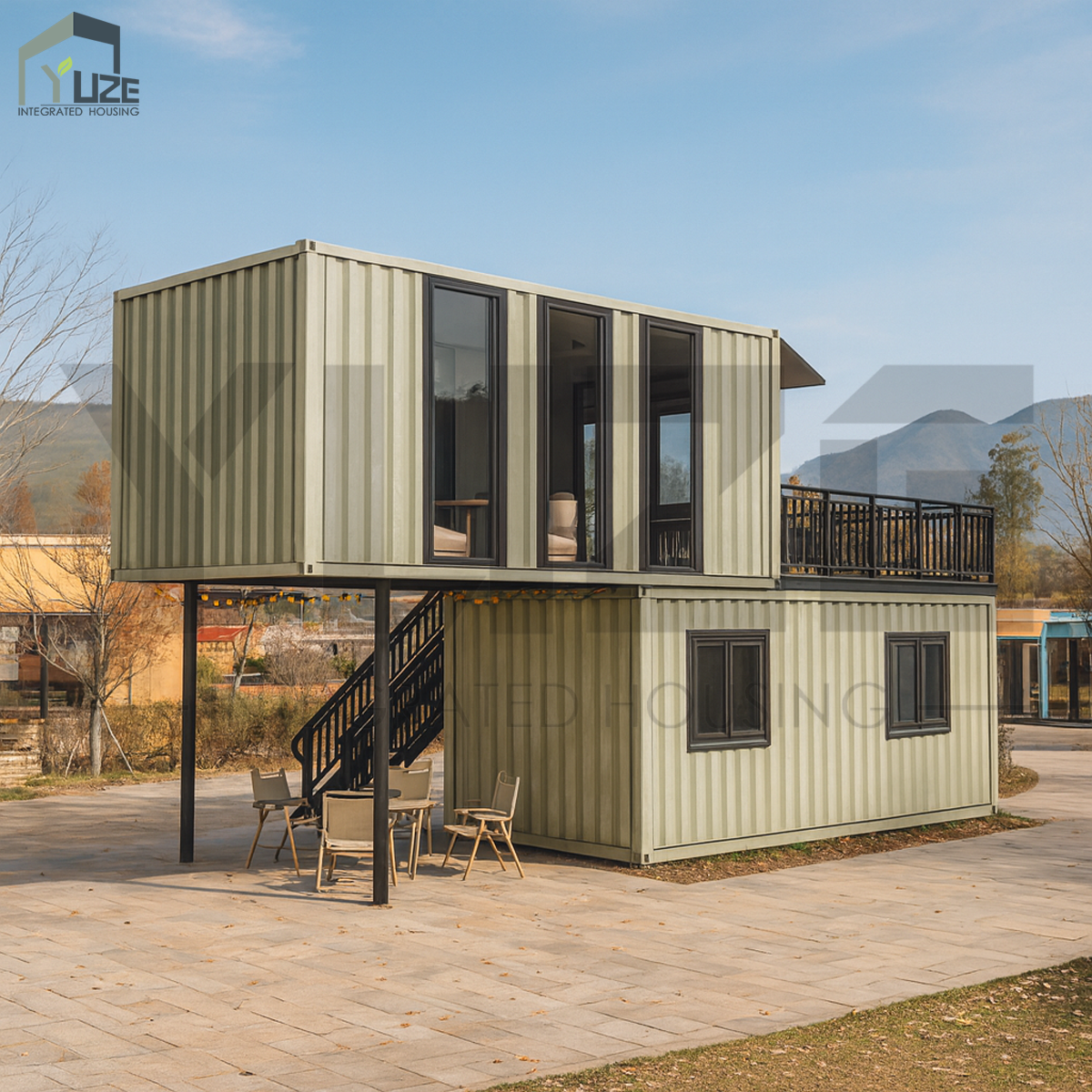
Factory-controlled modular house construction achieves 45% lower embodied carbon than traditional building methods by optimizing resource efficiency. Precision manufacturing minimizes material waste by up to 90% through exact cutting and inventory management, while centralized production reduces transportation emissions via consolidated logistics. The controlled environment enables consistent implementation of high-performance features—such as advanced insulation and airtight sealing—that slash operational energy consumption. Modular designs also support circular economy principles: structural components can be disassembled and repurposed at end-of-life, avoiding the landfill-bound waste typical of conventional demolition. This systematic approach delivers measurable carbon reductions across the entire building lifecycle—without compromising quality or schedule.
Modular house construction prioritizes sustainability through rigorous material selection, minimizing environmental impact while maximizing durability and indoor air quality. This strategy directly addresses carbon emissions at the source—by specifying low-impact resources across all structural and finish components.
Cross-laminated timber (CLT) serves as a carbon-sequestering alternative to concrete, storing approximately 1 ton of CO₂ per cubic meter throughout its lifespan. When paired with recycled steel—which requires 75% less energy to produce than virgin steel—these materials form high-strength, low-impact structural systems. Prefabrication’s controlled environment further reduces material waste by 70% compared to traditional construction, ensuring precise utilization of resources.
Factory installation enables seamless integration of health-focused materials that are difficult to implement consistently on traditional job sites:
This material strategy achieves dual benefits: structures act as carbon sinks during operation, while occupants benefit from toxin-free indoor environments validated through third-party air quality testing.
Precision factory construction delivers intrinsic energy efficiency gains unavailable in traditional onsite building methods. Climate-controlled facilities eliminate weather-related compromises, enabling stringent quality control for every component.
Robotic assembly and computer-guided cutting produce building envelopes with exceptional airtightness—reducing uncontrolled air leakage by up to 50% compared to conventional builds. Continuous insulation layers and specialized framing techniques systematically eliminate thermal bridges, the critical weak points where heat escapes. Certified installers apply insulation without gaps or compression, guaranteeing uniform R-values. This manufacturing precision cuts HVAC loads by 30–40%, directly lowering utility bills.
Electrical and mechanical systems are pre-tested for interoperability before leaving the factory. Energy recovery ventilators (ERVs) maintain indoor air quality while reclaiming up to 80% of temperature energy from exhaust air. Smart panels synchronize solar inputs, battery storage, and grid interactions to shift consumption away from peak pricing periods. These coordinated systems achieve 15–20% higher operational efficiency than field-installed equivalents.
Modular construction reduces upfront embodied carbon by 30–38% compared to traditional methods—through optimized material sourcing, factory precision, and centralized procurement of low-carbon alternatives like recycled steel and FSC-certified timber. Lifecycle assessments (LCA) quantify emissions across all stages—from raw material extraction to end-of-life recycling—with Environmental Product Declarations (EPDs) verifying sustainability claims. This transparency allows manufacturers to identify and replace carbon-intensive components—such as high-emission insulation or finishes—with bio-based alternatives. Research shows modular homes achieve 25% lower embodied carbon through these strategies, accelerating progress toward net-zero targets.
Factory engineering enables seamless renewable energy integration. Structural designs incorporate pre-routed conduits and reinforced roof zones for solar panel installation, eliminating costly retrofits. Electrical systems include dedicated circuits and smart load centers that simplify battery storage hookups, while energy management software optimizes consumption patterns. Grid-interactive functionality supports bidirectional energy exchange—turning homes into virtual power plants during peak demand. In tropical climates, studies demonstrate that such integrated systems help achieve near-total energy neutrality when combined with passive cooling strategies. This holistic approach ensures renewable assets operate at maximum efficiency—covering 100% of operational energy needs.
Modular house construction involves building homes using prefabricated modules which are manufactured in a factory setting and then assembled on-site.
Modular construction reduces carbon emissions by optimizing resource efficiency, minimizing material waste, utilizing low-impact materials, and supporting circular economy principles.
Eco-friendly materials include cross-laminated timber, recycled steel, plant-based insulation, natural vapor barriers, and zero-VOC adhesives.
Precision factory construction enhances energy efficiency through airtightness, reduced thermal bridging, consistent R-value delivery, and integrated systems like heat recovery ventilation.

Guangzhou Yuze Integrated Housing Co., Ltd.
Copyright © Guangzhou Yuze Integrated Housing Co., Ltd. - Privacy policy

 EN
EN