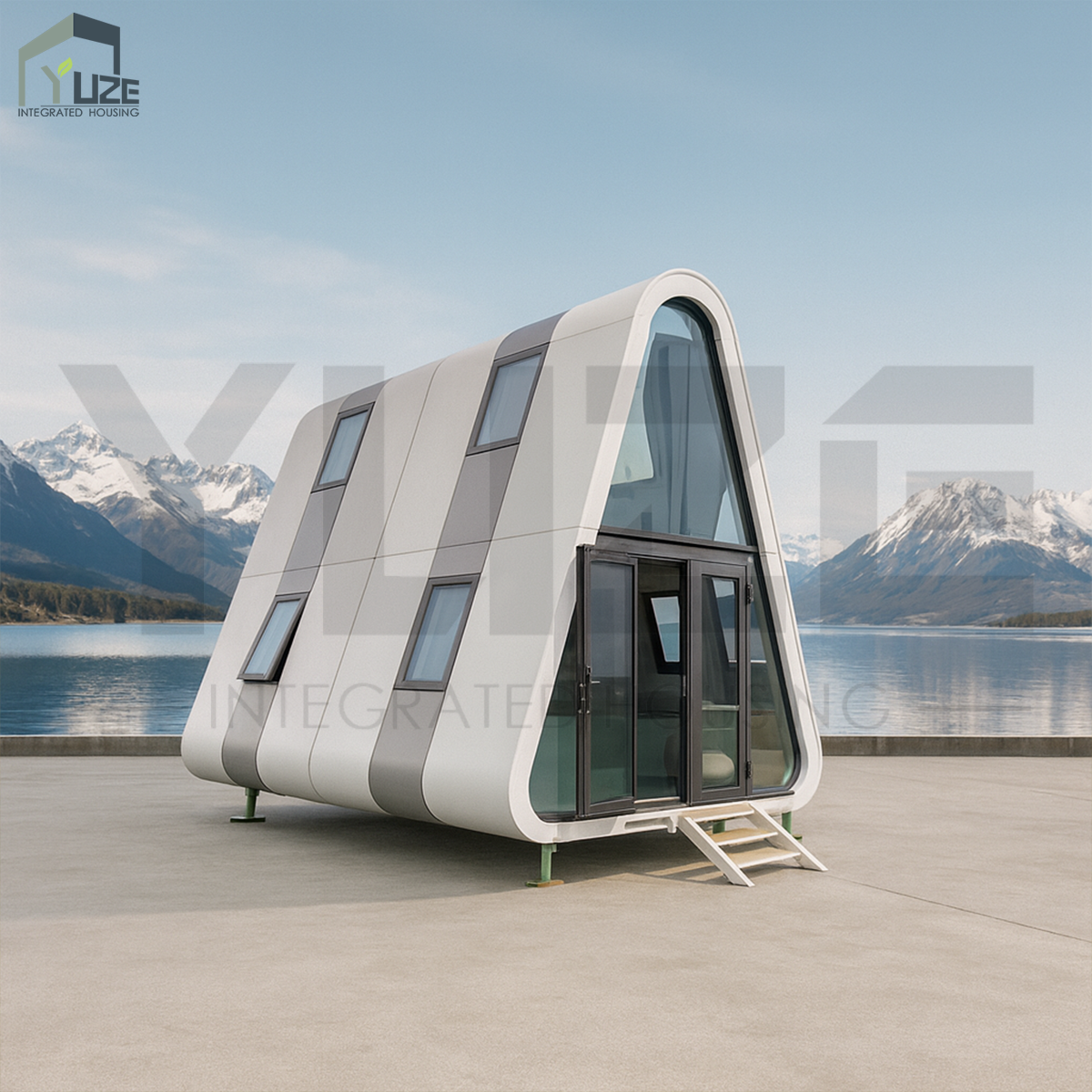
Travelers these days want places to stay that are both green and stand out from the crowd without hurting the planet. Capsule houses hit the mark exactly. They take up about 40 percent less space than regular cabins but still give amazing views because of how smartly they're placed on the land. The best part? These little pods can actually be moved around. Resorts can shift them between seasons or even move whole groups of them without leaving behind any permanent marks on nature. According to the Sustainable Travel Report for 2025, nearly two thirds of people who go glamping care deeply about staying somewhere with proper eco certifications. That means things like being ready for solar power, able to collect rainwater, and made from real recycled stuff aren't just nice touches anymore they're expected. When built in factories first, there's way less waste during actual construction. Plus, those energy efficient walls cut down running costs anywhere from 18 to 25 percent when compared to normal buildings.
When evaluating capsule houses, focus on four interdependent criteria:
Properties applying these criteria consistently report 22% higher guest retention and reach breakeven 31% faster (Hospitality Benchmark 2024). Crucially, durability must anchor cost calculations: corrosion-resistant exteriors and modular serviceability deliver the strongest 10-year TCO advantage—not lowest upfront price.
Capsule house systems made in factories can be set up completely within three days flat, even when dealing with tough spots like mountainsides, swampy areas, or places where the earth is sensitive. These units are built specifically so cranes can lift them into position, which means no digging holes or pouring concrete foundations. That saves a ton of hassle when putting structures on tricky ground types like rocky hillsides, marshes, or right next to trees without needing all sorts of permits first. The speed makes a real difference at the bottom line too. Resorts get their doors open way quicker compared to traditional construction methods sometimes ten times faster actually. This lets them start making money during those precious high season weeks instead of waiting around while competitors fill up the bookings.
Successful deployment hinges on logistics discipline. Use this field-tested checklist:
| Factor | Requirement | Impact on Deployment |
|---|---|---|
| Max Transport Width | ≈ 3.5m (standard highway clearance) | Avoids special permits and route restrictions |
| Foundation Type | Adjustable screw piles (slope tolerance: 15°) | Eliminates concrete curing, excavation, and soil compaction |
| Assembly Complexity | ≈ 3 major components with color-coded, tool-free connections | Enables setup by two trained staff in under 6 hours |
Pre-installed utilities and lightweight composite shells (<2.5 tons) cut on-site labor by 80%. One alpine resort achieved full occupancy within 48 hours of unit arrival—reducing deployment costs by 37% versus traditional methods.
Capsule houses with LEED or BREEAM certifications tend to charge about 18 to maybe even 22 percent more per night. But this isn't just some flashy marketing trick. These price differences actually reflect real environmental commitments that guests can trust. Many people who care about their carbon footprint specifically look for these green badges when booking trips. Hotels that display these certifications often find their direct bookings go up, they fill rooms better with folks interested in sustainable travel, and spend around thirty percent less money trying to attract customers through ads and promotions. Getting certified also helps hotels run things better inside. The whole process pushes them to set up proper systems for tracking electricity usage, measuring water consumption, and keeping tabs on waste generation, all of which cuts down expenses over time.
Studies on lifecycle performance show that capsule houses actually provide increasing value over time. Buildings made with certified recycled aluminum and steel save around 60% in embodied energy compared to using new materials, while still maintaining strong structural integrity for at least half a century. The buildings incorporate several passive climate control methods including high R-value insulation, thermal mass properties, and clever cross ventilation designs that together reduce HVAC costs by roughly 40% each year. When we add in the potential for rooftop solar installation, owners typically see energy savings somewhere above $7,200 over five years per unit according to various reports. Plus, these structures need less frequent maintenance and last longer as assets, which translates into operational savings that many experts estimate at about 19% annually on average.
The minimalist modern luxury capsule houses aren't just getting more bookings because they're new or different. They work so well because they bring together design, practicality, and how people actually feel about them. The clean straight lines, empty spaces that don't feel cluttered, and surfaces that feel good underfoot like those FSC certified composite wood floors really grab attention. According to the Hospitality Trends Report from 2025, this approach leads to about 42% more direct reservations. What makes these places special though? Privacy matters a lot too. Thick walls that block noise, windows placed just right for views without sacrificing seclusion, and locks that actually keep things secure turn small spaces into private retreats. When resorts let guests pick colors that match their mood, install smart lights that adjust automatically, or incorporate local materials into the decor, it helps build brand identity while making each stay unique. All these factors combined cut down on people leaving the site without booking by around 31%, and generally boost how many actual reservations happen compared to just browsing.
Choosing the right capsule house for your glamping resort boils down to aligning features with your goals—whether that’s maximizing ROI, delivering exceptional guest experiences, simplifying operations, or building a sustainable brand. The ideal capsule house isn’t just a structure—it’s a revenue-driving asset that resonates with modern travelers.
Yuze Housing—with 10+ years of expertise in modular and prefabricated solutions—specializes in custom capsule houses tailored for glamping resorts worldwide. Our units are engineered to meet the exact criteria that matter most to resort operators:
As a global exporter to 40+ countries, we offer end-to-end support: 72-hour custom design proposals, factory prefabrication, international logistics coordination, and on-site installation guidance—ensuring your capsule houses are deployed quickly and start generating revenue during peak season.
Whether you’re expanding an existing resort or launching a new glamping concept, Yuze Housing’s one-stop service eliminates guesswork. Contact us today for a no-obligation consultation to design the perfect capsule house for your resort—backed by a partner with a proven track record in modular hospitality solutions.

Guangzhou Yuze Integrated Housing Co., Ltd.
Copyright © Guangzhou Yuze Integrated Housing Co., Ltd. - Privacy policy

 EN
EN